Background Audio Effects on Player Choices in Mobile Reel Spins adn Card Games Featuring Instant Transfers
Petra Hansen · Jun 12, 2026
Background Audio Effects on Player Choices in Mobile Reel Spins adn Card Games Featuring Instant Transfers
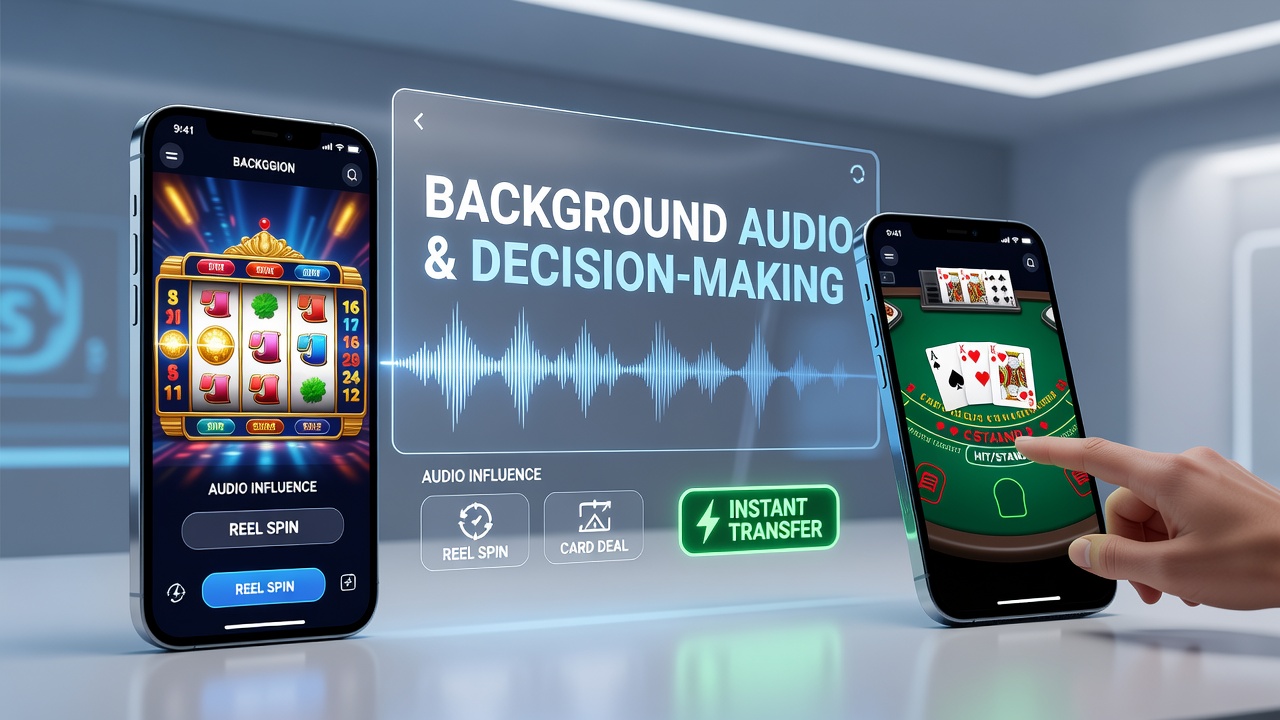
App-based gaming platforms incorporate layered soundtracks that play continuously while users engage with automated reels or live card dealings, and these audio elements interact directly with decision points during spins and hands. Research from cognitive psychology laboratories demonstrates that specific audio frequencies and tempos influence attention allocation and risk assessment in timed digital environments. Studies conducted across multiple jurisdictions track how music volume, tempo shifts, and ambient effects correlate with betting patterns when platforms enable immediate fund movements between accounts and games.
Audio Layers in App Interfaces
Developers design background tracks that loop during reel rotations or card shuffles, often syncing volume increases with win notifications or near-miss animations. Data collected from platform analytics shows that users adjust audio settings within the first three sessions at rates exceeding 60 percent according to aggregated reports from North American operators. Those adjustments frequently coincide with changes in bet sizing, particularly when instant transfer functions allow seamless movement of funds without leaving the active game screen.
Decision Timing During Spins
Reel spin sequences typically last between 2.5 and 4 seconds, creating brief windows where players select bet amounts or activate features. Audio cues that rise in pitch or intensity during these intervals have been linked in controlled experiments to faster click responses. Observers note that participants exposed to higher-tempo tracks place additional wagers at elevated rates compared with silent control groups, while slower ambient layers correspond with longer pauses before confirmation buttons are pressed. Platforms offering instant transfers record these interactions in real time, allowing system logs to capture both audio state and transaction velocity.
Card Dealing Environments and Sound Influence
Live dealer streams and automated card animations present different audio challenges because decision windows vary by game type. Blackjack rounds involve multiple choice points per hand, whereas baccarat follows more linear pacing. Research published through the Responsible Gambling Council in Canada indicates that background music amplitude affects perceived game speed, which in turn correlates with adjustments to wager levels when instant payout options remain visible on screen. Users who keep audio enabled throughout sessions demonstrate distinct retention curves compared with those who mute tracks after initial play periods.
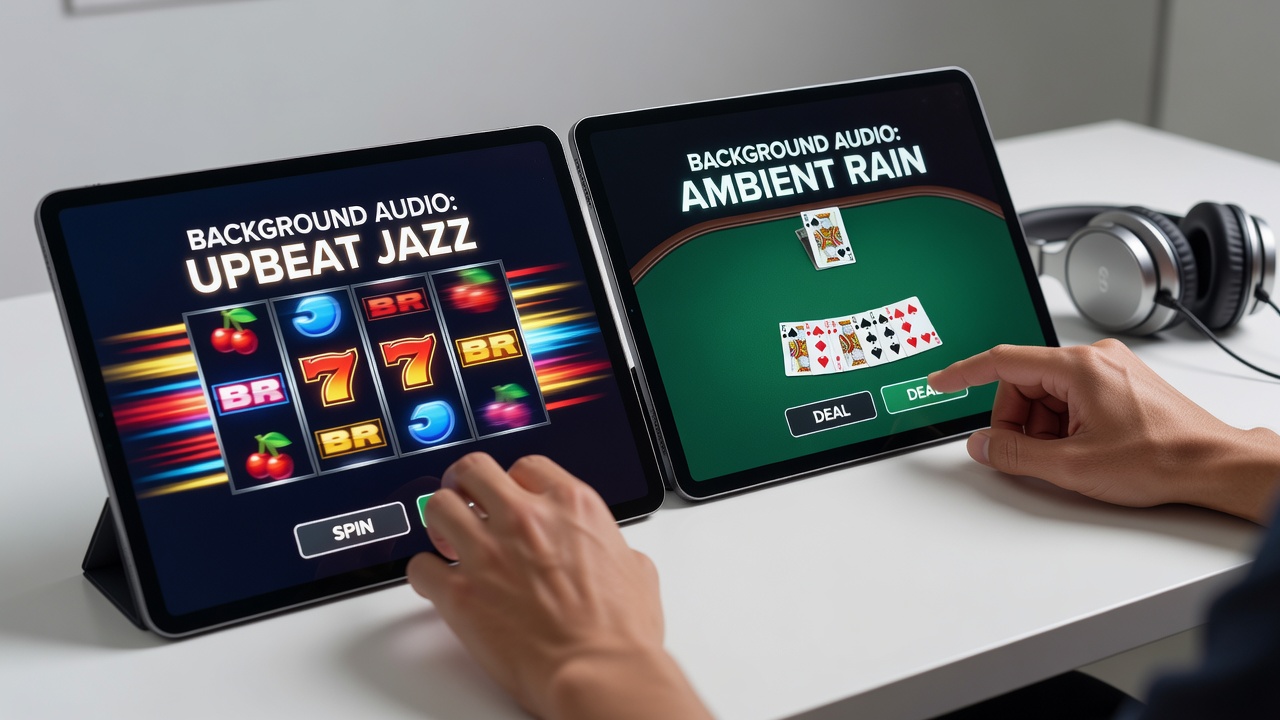
June 2026 brought updated technical standards in several Australian states requiring clearer audio toggles within gaming applications, following findings from the Australian Communications and Media Authority on user control over sound layers. These standards coincide with expanded testing of instant transfer integrations, where platforms must log both audio settings and transaction timestamps for compliance reviews. Operators report that compliance updates have prompted redesigns of default audio profiles to include neutral baseline tracks that avoid strong tempo cues during high-frequency decision moments.
Instant Transfer Integration and Behavioral Data
Instant transfer capabilities reduce friction between game rounds and account management, allowing players to replenish balances or withdraw winnings without exiting active sessions. When background audio remains active during these transfers, platform telemetry captures correlations between sound exposure duration and subsequent betting velocity. Figures from European gambling research networks reveal that sessions featuring continuous audio tracks alongside instant funding show higher average spin counts per minute than muted equivalents. The same datasets indicate no uniform effect across all demographics, with age brackets above 45 displaying smaller shifts in decision speed under identical audio conditions.
Regional Measurement Approaches
Regulatory bodies in different regions collect distinct metrics on audio influence. Canadian provincial regulators focus on session length distributions tied to audio state logs, whereas certain U.S. state gaming commissions emphasize wager size variance during reel features. Cross-border comparisons compiled by academic consortia highlight that platforms with prominent instant transfer buttons record measurable differences in audio adjustment frequency immediately after large balance movements. These patterns emerge consistently in anonymized datasets shared among research institutions studying digital gambling interfaces.
Platform Design Responses
Engineering teams have begun implementing adaptive audio systems that scale intensity based on detected user interaction speed. When reel spins accelerate beyond baseline thresholds or card decisions cluster rapidly, volume modulation occurs automatically while still preserving user override controls. Testing conducted by industry laboratories shows these adaptive layers reduce unintended audio-driven acceleration in decision sequences without eliminating the atmospheric role of background sound. Data logs from such implementations feed into broader studies examining how sound design intersects with payment flow efficiency across handheld devices.
Conclusion
Platform telemetry combined with controlled studies continues to map relationships between background audio parameters and decision timing in reel and card environments equipped with instant transfers. Regulatory updates scheduled through mid-2026 emphasize user-configurable audio options alongside transparent transaction logging. Continued data collection across jurisdictions provides the factual foundation for understanding these interactions without prescribing specific design mandates.