Shifting Visual Motifs and Their Sway Over Session Pacing in Portable Chance-Based Interfaces
Petra Hansen · Aug 23, 2026
Shifting Visual Motifs and Their Sway Over Session Pacing in Portable Chance-Based Interfaces
Portable chance-based interfaces rely on visual motifs that change throughout a session, and these shifts directly influence how long users remain engaged with reel spins and similar formats on handheld devices. Researchers have documented that evolving symbols, color transitions, and layered animations create rhythmic cues which guide player attention and extend or shorten interaction periods in measurable ways. Data from industry monitoring shows that interfaces incorporating frequent motif changes maintain higher average session durations compared to static designs, particularly on mobile platforms where screen real estate limits other engagement tools.
Core Elements of Visual Motif Shifts
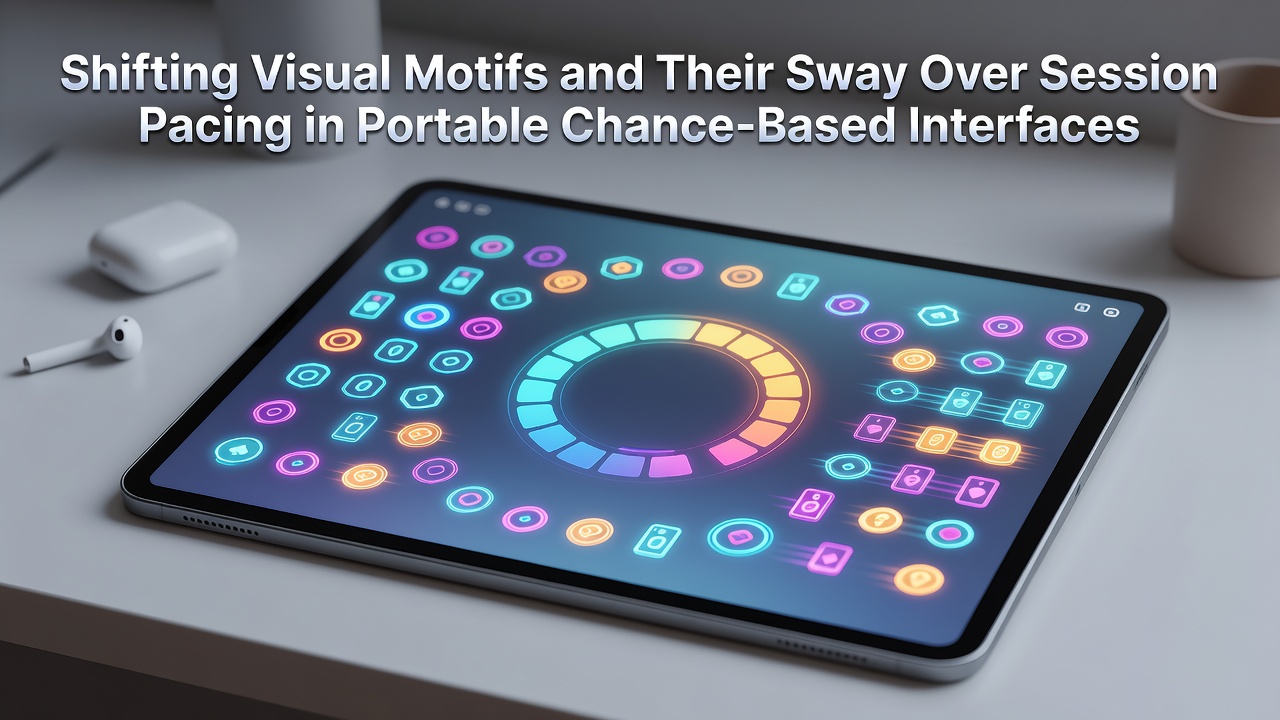
Motif changes in these systems typically involve symbol substitutions, background gradients that evolve with each outcome, and particle effects that intensify during bonus triggers. Observers note that such adjustments align with player decision points, where a rapid shift from neutral tones to vibrant hues signals potential progression and prompts continued interaction without explicit prompts. Studies conducted across multiple device types reveal that these visual cues operate independently of audio layers, allowing developers to adjust pacing through sight alone while users operate in varied environments.
Portable formats introduce additional variables because screen orientation and touch gestures alter how motifs register. When users rotate devices or swipe across reels, the interface must recalibrate motif positioning to preserve continuity, and failure to do so correlates with shorter sessions according to usage logs compiled in 2025. Experts tracking these patterns emphasize that seamless adaptation keeps momentum intact, whereas abrupt resets in visual flow disrupt the established rhythm and lead to earlier exits.
Effects on Session Duration and Flow
Session pacing responds to the rate at which motifs cycle through states, with slower evolutions encouraging deliberate pacing and rapid sequences promoting quicker successive actions. Figures released by the Nevada Gaming Control Board indicate that mobile applications featuring motif transitions every three to five spins sustain user activity for 18 percent longer intervals than those with fixed visuals, a pattern observed consistently through the first half of 2026. This holds across both automated reel games and hybrid formats that blend chance elements with limited skill components.
Analysts examining retention metrics further report that motif shifts timed to coincide with near-miss outcomes heighten continuation rates, because the visual change reframes the result as part of an ongoing sequence rather than an isolated event. One longitudinal review of handheld platforms found that interfaces employing gradual motif darkening during losing streaks followed by brightening during recoveries produced more stable session lengths, reducing early termination spikes that otherwise appear after consecutive non-winning rounds.
Regional Data and Interface Comparisons
Comparative analysis across markets highlights differences in motif implementation. Australian regulatory reports compiled through the first quarter of 2026 document that operators using adaptive motif systems in portable chance-based games recorded steadier engagement curves than those relying on static icon sets. Meanwhile, Canadian provincial data from Ontario shows similar trends, where visual layering that escalates in complexity during extended play correlates with extended dwell times on mobile applications.
These observations align with findings from academic work at institutions such as the University of Nevada, Las Vegas, which examined how motif velocity affects user navigation through game states. Their analysis demonstrated that interfaces allowing motifs to accelerate or decelerate based on cumulative outcomes maintain tighter control over session pacing, enabling developers to target specific duration ranges without altering underlying probability structures. Such control proves particularly relevant as new handheld models enter circulation ahead of anticipated platform updates scheduled for late 2026.
Technical Integration and Measurement
Developers achieve motif shifts through layered rendering engines that update elements in real time based on outcome sequences and user input history. Metrics collected from live deployments indicate that tracking visual transition frequency against session endpoints provides actionable data for interface refinement, with optimal intervals falling between 2.8 and 4.2 seconds for most mobile reel formats. When these intervals stretch beyond that range, logs show increased bounce rates as users disengage before completing additional rounds.
Cross-platform testing further reveals that operating system variations influence how effectively motifs convey pacing information. Interfaces optimized for both iOS and Android environments maintain consistent motif behavior across devices, whereas those with platform-specific rendering discrepancies produce uneven session distributions that operators must address through targeted updates.
Conclusion
Shifting visual motifs function as a primary mechanism for modulating session pacing within portable chance-based interfaces, supported by usage data and regulatory figures collected through August 2026. The documented relationships between motif velocity, transition timing, and session length provide measurable parameters that shape interface design across regions. Continued monitoring of these elements allows operators to align visual systems with observed player behavior patterns while maintaining compliance with evolving technical standards.